.png)
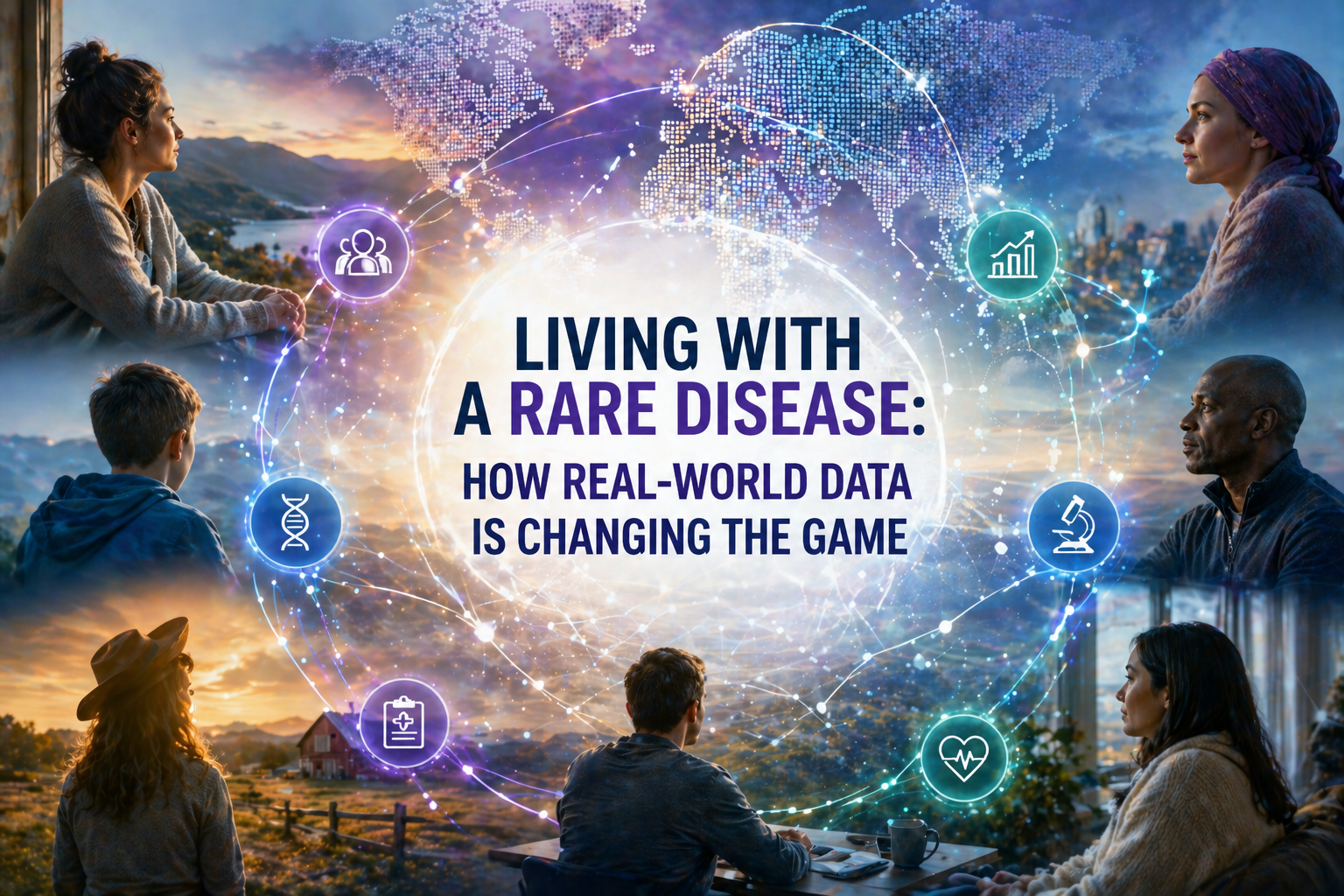
If you're living with a rare disease, you already know how isolating it can feel. Long diagnostic journeys, limited treatment options, and the constant sense that the medical system wasn't built with you in mind. For many rare disease patients, it takes an average of five to seven years to receive an accurate diagnosis.
Part of the challenge is data. Rare diseases are, by definition, uncommon, which means clinical trials are small, difficult to recruit for, and slow to produce results. Pharmaceutical companies often lack the evidence base to justify investing in new therapies. And clinicians managing rare conditions frequently rely on case reports and expert opinion rather than large-scale evidence.
Real-world data (RWD) is beginning to change that equation. By collecting and analyzing health information from patients' existing medical records — diagnoses, lab results, treatment histories, and clinical notes — researchers can build datasets that were previously impossible to assemble for rare conditions.
This approach is especially powerful when it draws from diverse, geographically distributed patient populations. A patient with PNH in rural Texas and a patient with SMA in Boston may never meet, but their combined health data can reveal treatment patterns, biomarker trajectories, and disease progression insights that neither could contribute alone.
Regulatory agencies are paying attention. The FDA has increasingly recognized real-world evidence as a valid input for drug approvals, label expansions, and post-market safety monitoring — particularly for rare diseases where traditional randomized trials may not be feasible.
For patients, contributing is straightforward. Platforms like Unite let you connect your medical records from multiple providers and contribute your de-identified data to active research studies — all from home, in just a few minutes. No extra visits, no blood draws, no disruption to your care.
Your health data has the power to accelerate research that could help not just you, but the entire community of patients sharing your condition. In rare disease, every data point matters.
